
David Waldie
The Linlithgow Chemist Who Helped Change Medicine
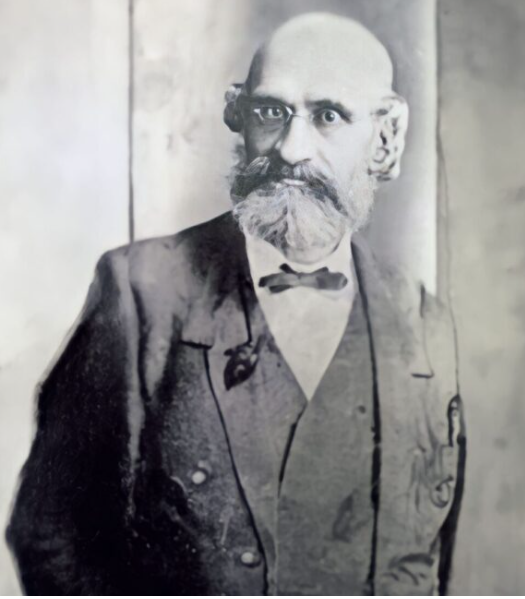
David Waldie
Some discoveries begin with a dramatic breakthrough.
Others begin with a conversation.
In the autumn of 1847, Linlithgow-born chemist David Waldie was visiting Scotland from Liverpool when he met his old acquaintance James Young Simpson.
Simpson was searching for a better way to relieve pain during surgery and childbirth. Waldie, drawing on his own knowledge and experiments as a chemist, made a suggestion that would help transform medicine:
Why not try pure chloroform?
Within weeks, Simpson had demonstrated its potential as an anaesthetic. Chloroform would go on to change surgery and medicine around the world.
But the story of the Linlithgow man who pointed Simpson towards it is much less well known.
And David Waldie's remarkable life didn't end there.
He would eventually travel thousands of miles to India, establish his own chemical company and help develop an industry whose legacy continues today.
From Linlithgow to Medicine
David Waldie was born in Linlithgow on 27 February 1813.
He studied to become a surgeon at the Royal College of Surgeons in Edinburgh, qualifying as a Licentiate in 1831. He then returned to his home town, where he practised as a surgeon.
Medicine, however, wasn't Waldie's only interest.
He became increasingly fascinated by chemistry and in 1839 left his medical practice in Linlithgow to move to Liverpool, where he became chemist to the Liverpool Apothecaries' Hall.
It was there that his work brought him into contact with a substance that would eventually make medical history.
A More Personal Side to David Waldie
In this letter written in Liverpool in 1846, Waldie writes affectionately to his young niece Agnes in Linlithgow, telling her about the doll he sent her - and reminding her to become a good scholar and learn to spell correctly.
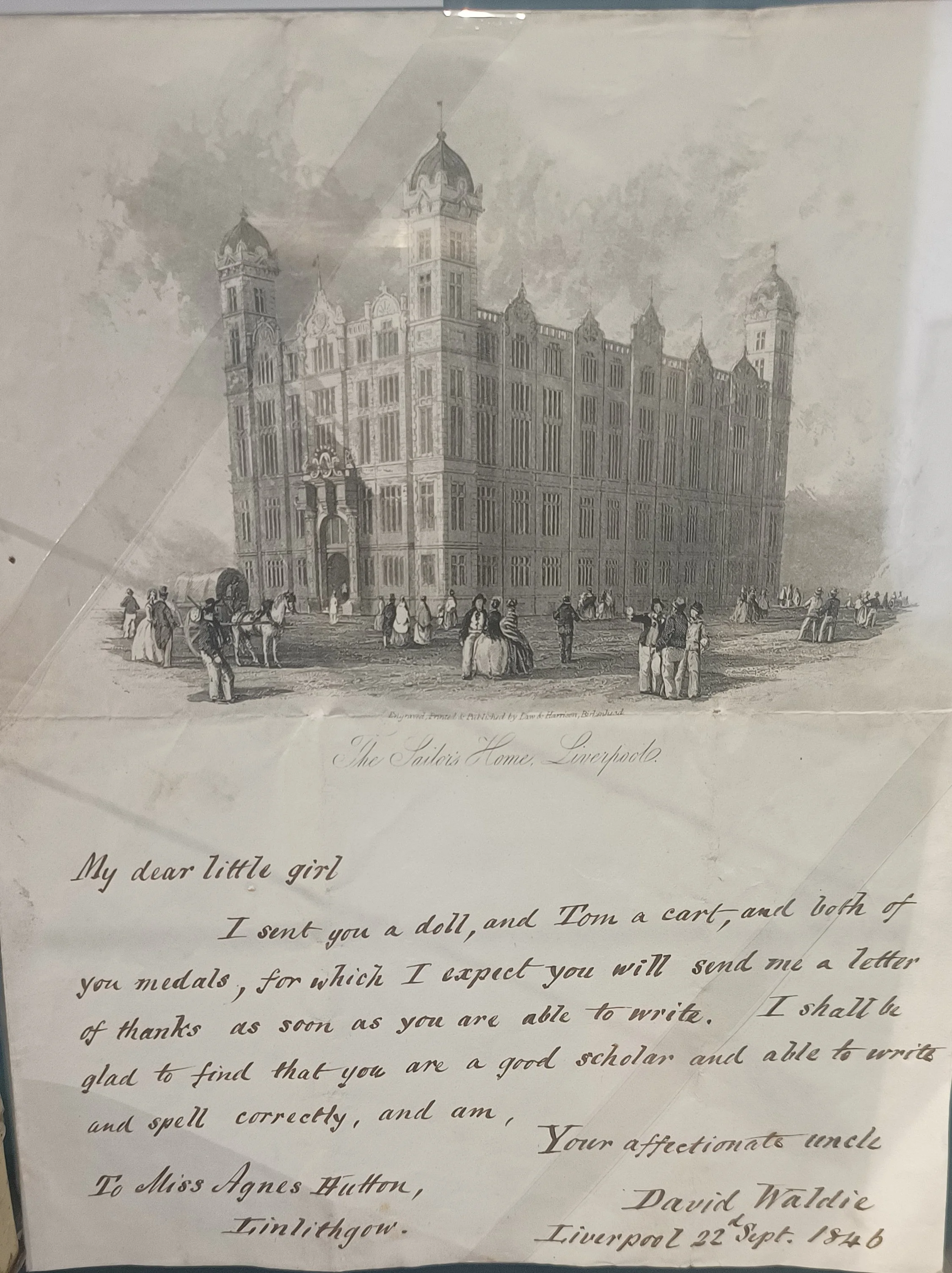
Handwritten letter from David Waldie to his niece
A Curious Chemical
Chloroform itself wasn't Waldie's discovery. The chemical had first been produced by other researchers during the early 1830s.
Waldie's interest was in its preparation and purity.
At Liverpool he worked with chloric ether, a medicinal preparation containing chloroform dissolved in alcohol. Waldie recognised problems with the preparation and worked to produce a purer and more stable product.
That specialist knowledge would prove extremely important.
A Conversation That Changed Medicine
In 1847, Waldie returned to Scotland and met James Young Simpson, an old acquaintance from their student days who had become Professor of Midwifery at the University of Edinburgh.
Simpson was searching for a better anaesthetic.
Ether was already being used, but Simpson was looking for an alternative, particularly for relieving the pain of childbirth.
During their conversation, Waldie explained that chloric ether contained a large proportion of alcohol. Rather than experimenting with that mixture, he advised Simpson to try pure chloroform instead.
Waldie intended to prepare some himself when he returned to Liverpool and send it to Simpson for testing.
There was just one problem.
The Laboratory Fire
The laboratory where Waldie worked in Liverpool had been badly damaged by fire in 1846 and had not yet been fully restored.
Waldie therefore couldn't prepare the chloroform he had promised.
Simpson didn't wait.
Chloroform was obtained in Edinburgh and, on 4 November 1847, Simpson and his colleagues James Matthews Duncan and George Skene Keith experimented with it at Simpson's home.
Its effects were dramatic.
Simpson quickly recognised the potential of chloroform as an anaesthetic and began using and promoting it.
Importantly, Simpson himself acknowledged Waldie's contribution. In his early account of the discovery, he credited Waldie with suggesting chloroform as a substance worthy of trial.
Who Discovered Chloroform Anaesthesia?
History isn't always as straightforward as we'd like it to be.
Waldie did not discover chloroform itself, nor was he the person who demonstrated its practical use as an anaesthetic.
That achievement is rightly associated with James Young Simpson and his colleagues.
But Waldie's contribution was important.
His knowledge as a chemist led him specifically to recommend pure chloroform to Simpson at exactly the time Simpson was searching for a new anaesthetic.
Waldie himself later wondered what might have happened had his Liverpool laboratory still been operational. Writing after Simpson's death, he recalled his suggestion and believed that, had he been able to prepare the chloroform himself, he might have discovered its anaesthetic properties.
There seems to have been no great bitterness towards Simpson, however. In the same account Waldie described him warmly as a remarkable man.
Their story is perhaps more interesting than a simple argument over who deserves the credit.
One man's chemical knowledge and another man's medical experimentation came together at precisely the right moment.
And medicine changed as a result.
A New Adventure
Waldie's life was about to take another extraordinary turn.
In 1853, aged 40, he left Britain for India to take up a position as a chemist with Malcolm & Co. in Calcutta.
His journey took him from Southampton to Calcutta between March and May 1853. Fortunately for us, Waldie did something rather special along the way.
He kept a journal.
He recorded the journey, the places through which he travelled and his observations of the people and landscapes he encountered.
That handwritten journal would eventually travel all the way back to the town where his story began.
A Remarkable Journey
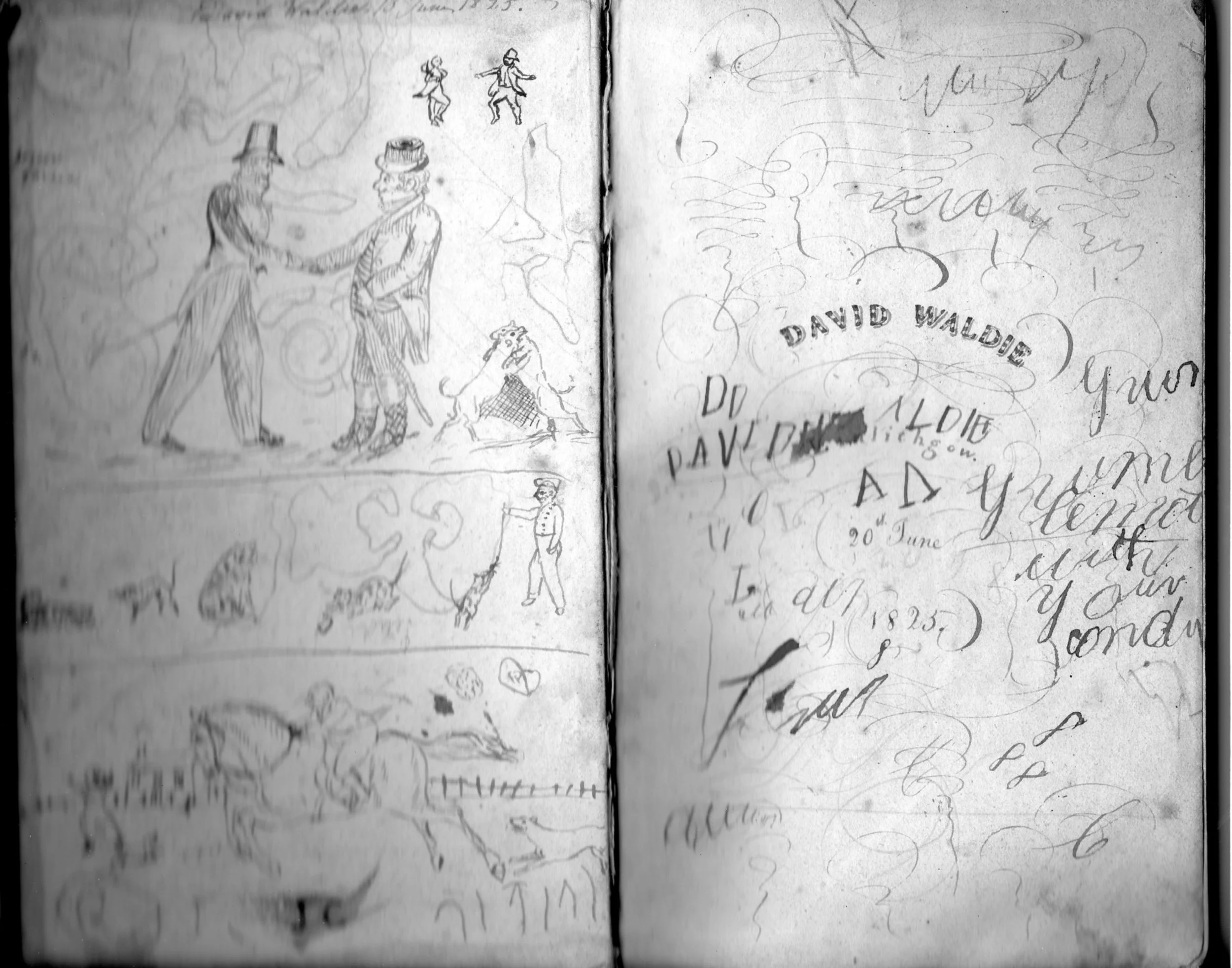
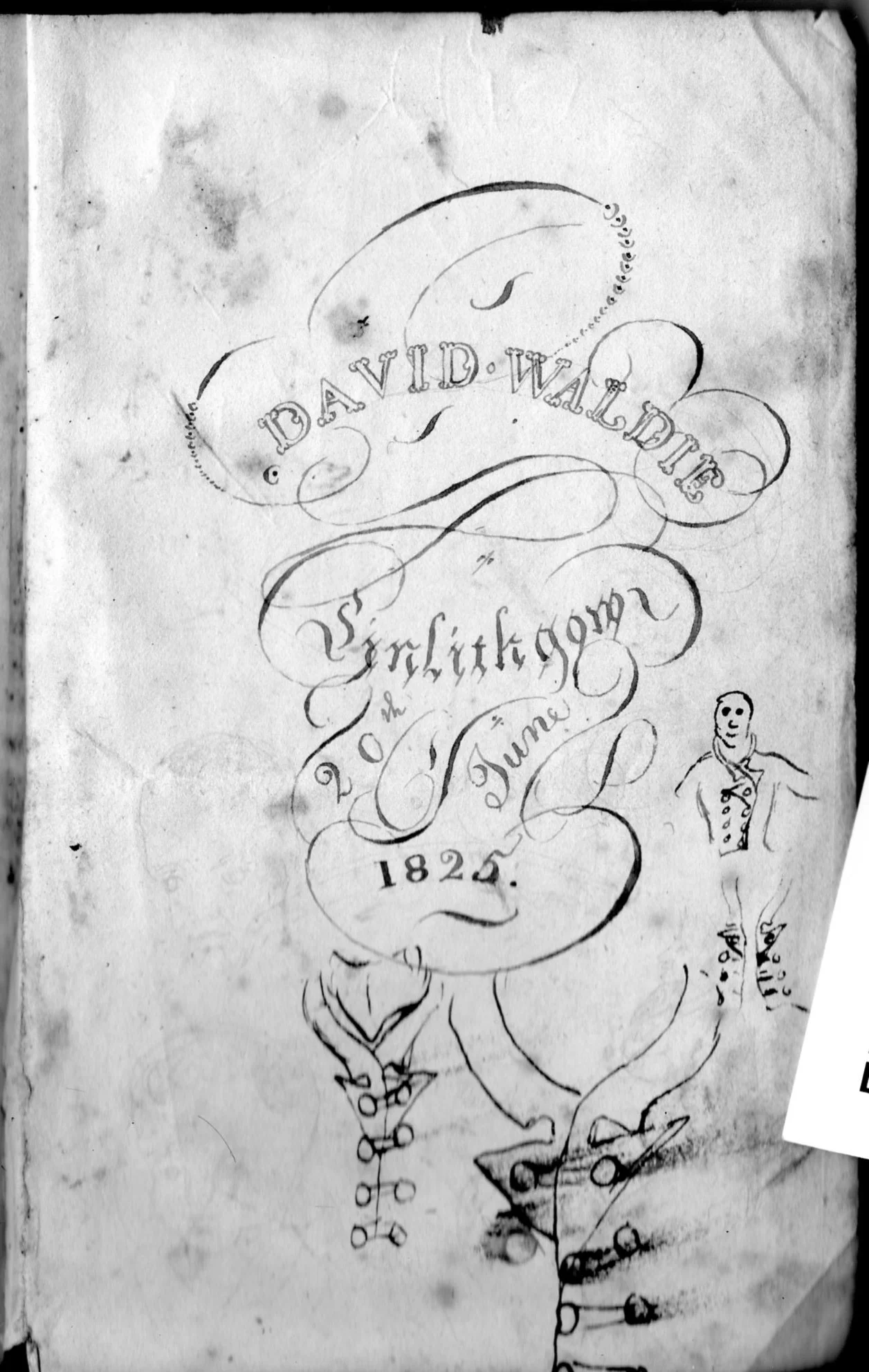
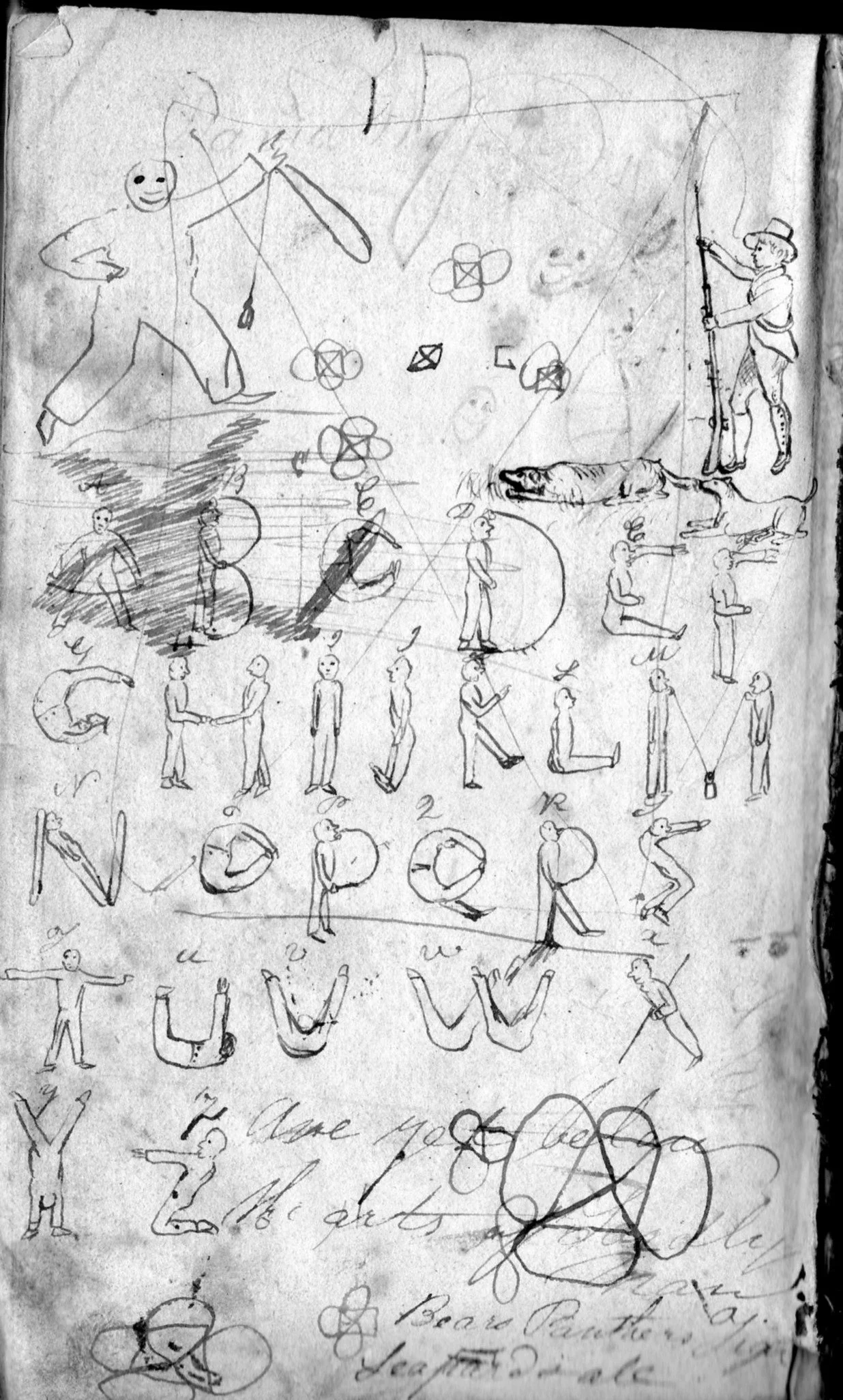
Waldie's handwritten journal is now held in the collection of Linlithgow Museum, bringing the story of his remarkable journey back to the town where his own story began.
But the journal records more than his written observations. Its pages are filled with sketches and diagrams — from boats and landscapes to wonderfully informal doodles — offering a rare and personal glimpse of the man behind the scientific achievements.
Building a New Life in India
Waldie arrived in Calcutta in May 1853 and began working for Malcolm & Co., a Scottish firm of chemical manufacturers.
By 1858, he had established a business of his own: D. Waldie & Co.
The company became an important chemical manufacturer and pioneered the large-scale manufacture of lead oxides in India.
Remarkably, Waldie's industrial legacy didn't disappear with the Victorian era.
The business he founded in 1858 survives today as Waldies, a chemical manufacturing company still based in India.
So a company established by a Linlithgow-born chemist more than 160 years ago continues to carry his name.
Scotland, India and Empire
Waldie's journey also belongs within the much wider story of Scotland and the British Empire.
During the 18th and 19th centuries, many Scots travelled to India as soldiers, doctors, engineers, administrators, merchants and entrepreneurs. The opportunities available to them were closely connected to Britain's colonial presence and the political and economic structures it created.
Waldie's scientific and business career in India developed within that world.
He became an established member of Calcutta's scientific community and was involved with the Asiatic Society of Bengal, eventually serving as its Vice-President in 1884.
India wasn't simply somewhere Waldie visited.
It became his home.
He remained there for the rest of his life, dying in Calcutta in 1889. He was buried in the city's Scottish Cemetery.
A Journey Preserved
More than a century later, an extraordinary piece of Waldie's story returned to Linlithgow.
Linlithgow Museum cares for David Waldie's handwritten journal recording his voyage to India.
The journal was donated by Waldie's grand-niece and today forms an important part of the Museum's collection. Its significance isn't simply that it belonged to Waldie.
These are his own words.
Through its pages, we can follow a Linlithgow man travelling through a rapidly changing 19th-century world on the journey that would lead to the second half of his life.
The journal also reminds us that historical documents reflect the people and societies that created them.
Some of Waldie's descriptions and terminology reflect attitudes of the 19th century and may be uncomfortable or offensive to modern readers. We preserve and interpret his words in their historical context rather than altering them, recognising that they can also help us understand the attitudes and inequalities of the world through which he travelled.
His journal therefore tells us more than where he went.
It gives us an opportunity to explore how a Victorian Scottish traveller saw and described the world around him.
Follow Waldie's Journey at Linlithgow Museum
Visitors to Linlithgow Museum can discover more of Waldie's remarkable journey for themselves.
The Museum's collection includes his original handwritten journal, and material from it was used to create an interactive touchscreen experience that allows visitors to follow his travels towards India. The Museums Association highlighted both the journal and the audiovisual interactive when reviewing the Museum following its redevelopment.
And Waldie's account can still be read today.
His journal was edited by Alan G. Young and published by Linlithgow Heritage Trust in 2013 as Journal of a Voyage from England to Calcutta by the Overland Route. The published edition runs to almost 200 pages.
Copies are available from the Museum shop, allowing visitors to take Waldie's story home and discover his journey through his own words.
A Linlithgow Legacy
David Waldie's life connected Linlithgow with two very different stories of 19th-century change.
His knowledge of chemistry helped point James Young Simpson towards chloroform, contributing to a development that transformed the treatment of pain.
Then he travelled halfway around the world and established a chemical business in India whose legacy has survived for more than 160 years.
His isn't quite the familiar story of the lone genius making a sudden discovery.
Perhaps it's more interesting than that.
It's a story about how discoveries really happen — through knowledge, conversations, experiments and people sharing ideas.
It's also a story about travel, ambition and the movement of people and knowledge around a rapidly changing world.
David Waldie's story began in Linlithgow, travelled through Liverpool and halfway around the world to India.
And today, part of that story has come home.
At Linlithgow Museum, David Waldie's own handwritten words are helping a new generation discover his remarkable journey.
DID YOU KNOW?
David Waldie was born in Linlithgow on 27 February 1813.
He trained as a surgeon before pursuing his growing interest in chemistry.
Waldie specifically recommended that James Young Simpson experiment with pure chloroform as an anaesthetic. Simpson acknowledged his suggestion in his early account.
Waldie intended to prepare chloroform for Simpson in Liverpool, but the laboratory where he worked had been damaged by fire.
He left Britain for Calcutta in 1853, recording his journey in a handwritten journal.
That remarkable journal is now cared for by Linlithgow Museum, having been donated by Waldie's grand-niece, and also forms the basis of an interactive museum experience.
Waldie established his own chemical business in India in 1858.
The company descended from his business still operates today and still carries the Waldie name.
Waldie became Vice-President of the Asiatic Society of Bengal in 1884.