
Sir Charles Wyville Thomson
Linlithgow's Explorer of the Deep
Long before humans ventured into space, there was another largely unknown world waiting to be explored.
It lay beneath the waves.
In the 19th century, scientists knew remarkably little about the deepest parts of the world's oceans. Some even believed that life could not survive beyond a certain depth.
One of the people who helped change that understanding was Sir Charles Wyville Thomson — born at Bonsyde, Linlithgow, and one of the pioneering scientists whose work helped lay the foundations of modern oceanography.
His greatest adventure would take him around the world aboard HMS Challenger on a voyage that transformed our understanding of the oceans and revealed a world previously hidden beneath the surface.
A Linlithgow Scientist
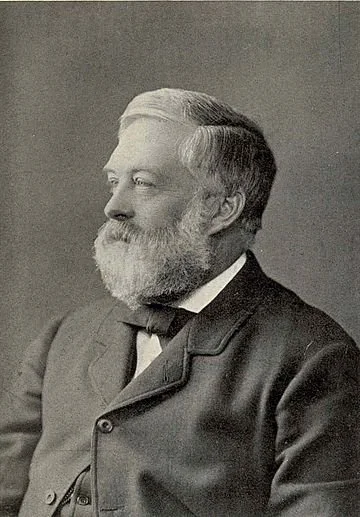
Sir Charles Wyville Thomson
Charles Wyville Thomson was born at Bonsyde, Linlithgow, on 5 March 1830.
He developed an early interest in natural history and went on to build a remarkable academic career. His work took him to universities in Aberdeen, Cork, Belfast and Dublin before, in 1870, he became Professor of Natural History at the University of Edinburgh.
Although his scientific interests were initially wide-ranging, Thomson became increasingly fascinated by marine life — and particularly by the question of what might be living in the deepest parts of the ocean.
At the time, the deep sea remained one of the least understood environments on Earth.
Some scientists believed that beyond a certain depth the ocean floor was effectively lifeless, with the darkness, cold and immense pressure making survival impossible.
Thomson was among those who began to prove otherwise.
Is There Life in the Deep?
During the late 1860s, Thomson took part in deep-sea dredging expeditions aboard ships including HMS Lightning and HMS Porcupine.
These expeditions recovered animals from depths where some scientists believed life simply shouldn't exist. The results helped overturn the idea of a lifeless deep ocean and raised an exciting new question.
If life existed at these depths, what else might be down there?
Answering that question would require something much more ambitious.
An Ocean Waiting to be Explored
With support from the Royal Society, the British government and the Royal Navy, plans were developed for an expedition unlike anything attempted before: a scientific voyage around the world dedicated to investigating the oceans.
The Royal Navy provided HMS Challenger, a former warship that was transformed into a floating laboratory.
Most of her guns were removed to make room for scientific equipment, laboratories and specimen storage. The ship even carried more than seven kilometres of rope for lowering instruments and dredges into the depths.
Charles Wyville Thomson was appointed scientific director of the expedition.
On 21 December 1872, HMS Challenger sailed from Portsmouth.
Ahead lay almost four years of exploration.
The Challenger Expedition
Between 1872 and 1876, HMS Challenger travelled across the world's oceans on what is now recognised as the first global oceanographic research expedition.
The scientists aboard weren't simply travelling from one destination to another. Again and again, Challenger stopped so they could investigate the ocean beneath them.
They measured the depth of the water.
They recorded its temperature.
They sampled seawater and sediments.
They dredged the seabed.
They collected marine animals and plants.
And slowly, measurement by measurement and specimen by specimen, an invisible world began to emerge.
Life in the Deep
One of the expedition's greatest achievements was revealing just how much life existed in the deep ocean.
Over the course of the voyage, thousands of specimens were collected. More than 4,700 species previously unknown to Western science were eventually described from Challenger's work.
Creatures were recovered from extraordinary depths.
Among them was Abyssothyris wyvillei, a small marine animal found more than 4,800 metres beneath the surface and later named in honour of Wyville Thomson.
The supposedly empty depths were proving to be anything but empty.
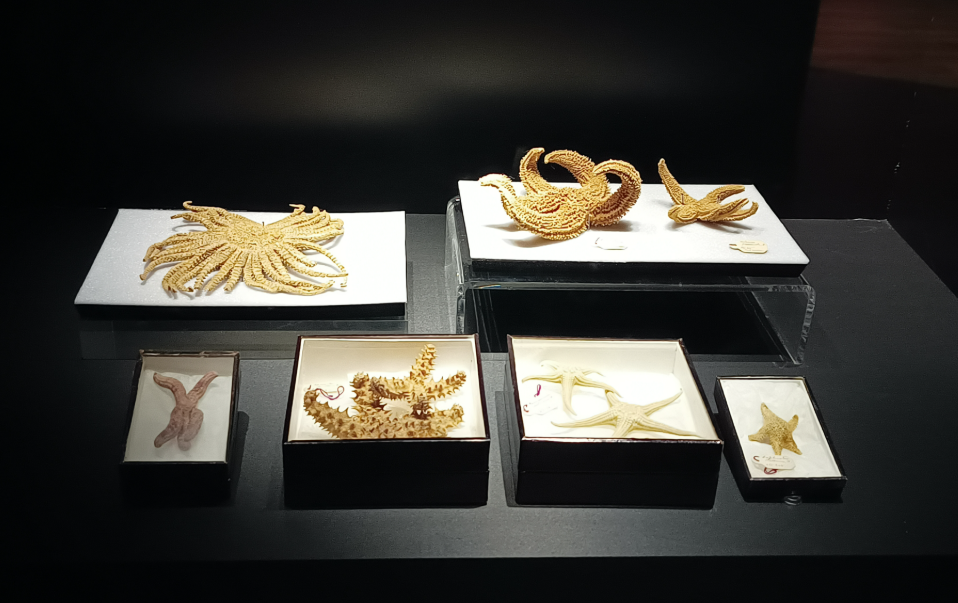
Deep sea creatures from the HMS Challenger Expedition. © Courtesy of the Royal Navy Museums
Measuring an Unknown World
The expedition wasn't interested only in the creatures living beneath the waves.
Challenger's scientists systematically measured the oceans themselves, helping to reveal the shape and depth of the ocean floor.
While crossing the western Pacific, they recorded a depth of more than 8,000 metres in the enormous underwater feature we now know as the Mariana Trench.
Modern measurements have revealed an even deeper point within the trench, almost 11 kilometres beneath the surface.
Its name?
Challenger Deep
It was named in honour of the ship and expedition that helped reveal this extraordinary underwater landscape.
How did they measure the ocean?
In 1875, HMS Challenger recorded a depth of 4,475 fathoms (8,184 metres) in the Mariana Trench — the greatest ocean depth then known.
But there was no sonar. Instead, the crew lowered a weighted sounding line from the ship, paying out thousands of metres of line until the weight reached the seabed. The length of line told them the depth, while specially designed equipment could also bring samples of the ocean floor back to the surface.
Their sounding did not reach the deepest point we now know as Challenger Deep, which lies almost 11 kilometres beneath the surface. Later surveys revealed the true scale of the trench, and its deepest known area was named in honour of HMS Challenger and her pioneering expedition.
Just how deep is Challenger Deep?
Almost 11 kilometres beneath the surface, its true scale is difficult to imagine. This animation puts the deepest known point in Earth's oceans into perspective.
Discoveries Still Important Today
Some of Challenger's discoveries have acquired a significance the Victorian scientists aboard could never have anticipated.
The expedition collected unusual potato-sized lumps from the seabed known as polymetallic nodules. These were the first such nodules to be scientifically recorded and contain metals that are now of considerable interest for modern technology — although proposals to mine them have also raised serious environmental concerns.
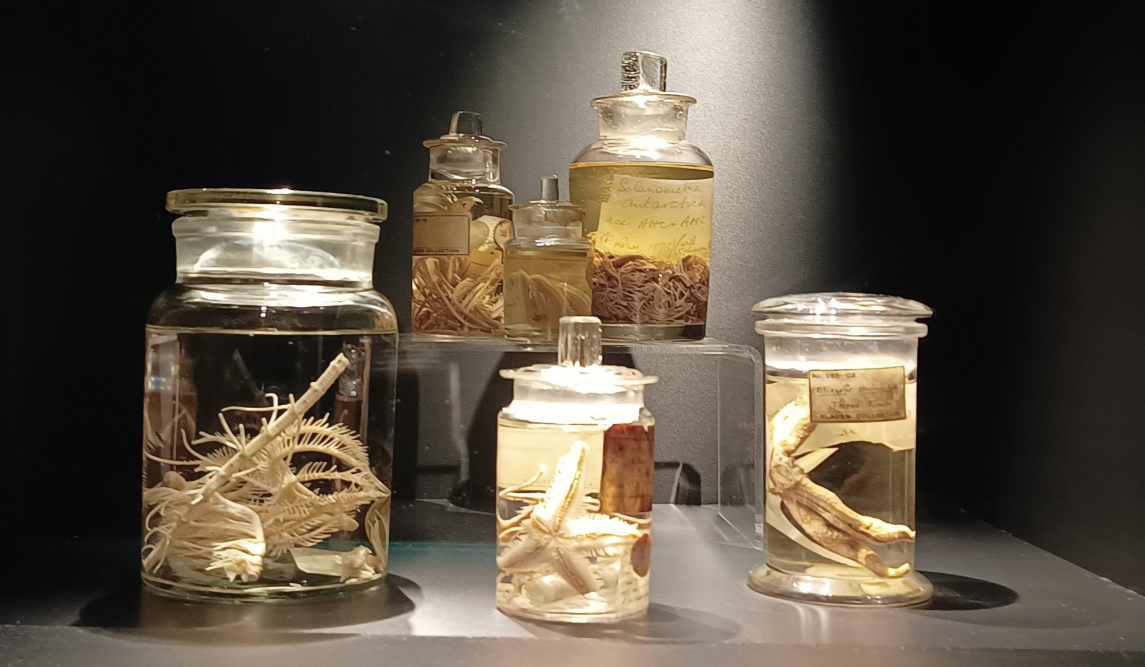
Samples from the HMS Challenger Expedition. © Courtesy of the Royal Navy Museums
Perhaps even more remarkably, specimens collected by Challenger more than 150 years ago are still being used by scientists today.
Researchers have compared microscopic organisms gathered during the expedition with modern specimens to investigate changes in ocean chemistry and the effects of climate change.
The Natural History Museum still holds extensive Challenger collections, including thousands of samples of sediments gathered from the world's oceans.
The expedition wasn't simply discovering the oceans for Victorian science.
It created a scientific record that is still helping us understand them.
A Voyage Around the World
The Challenger expedition travelled through the Atlantic, Southern and Pacific Oceans, visiting places including southern Africa, Australia, New Zealand, Pacific islands, Japan and Hawaii before eventually returning home.
But like many European expeditions of the 19th century, Challenger also travelled through a world shaped by empire and colonialism.
The expedition depended upon the global reach of the British state and Royal Navy. Accounts written by members of the expedition also reflected Victorian attitudes towards Indigenous peoples. While there were examples of cooperation with local communities, other encounters and descriptions contained ideas and language that are recognised today as racist and unacceptable.
Understanding the Challenger expedition today means recognising both its extraordinary contribution to science and the historical world in which that science took place.
The Birth of Modern Oceanography
When HMS Challenger finally returned to Britain in 1876, the voyage itself was over.
The scientific work was only beginning.
The expedition had gathered such an enormous quantity of specimens, measurements and observations that scientists would spend decades studying them.
The eventual Challenger Reports became one of the foundations of modern marine science.
Wyville Thomson was knighted in 1876 in recognition of his work, but the immense task of organising and publishing the expedition's findings took its toll on his health.
He died in 1882, before the full results had been published, and his colleague John Murray continued the enormous task.
Today, the Natural History Museum recognises Thomson and Murray as deserving recognition as founders of modern deep-sea oceanographic studies.
A Famous Student
Wyville Thomson's influence stretched beyond oceanography.

Arthur Conan Doyle
As Professor of Natural History at the University of Edinburgh, one of the students who encountered his teaching was a young medical student named Arthur Conan Doyle — long before he became famous as the creator of Sherlock Holmes.
Conan Doyle later remembered Thomson as one of his Edinburgh professors and knew him as the zoologist newly returned from the remarkable Challenger expedition.
And there may be another intriguing connection.
Years later, Conan Doyle created the formidable scientist and explorer Professor George Edward Challenger, best known from his 1912 novel The Lost World.
The character himself appears to have drawn particularly on Conan Doyle's Edinburgh physiology professor William Rutherford. However, researchers have suggested that the name Challenger may have been inspired by HMS Challenger and its famous expedition, led scientifically by Thomson.
We can't know for certain — but it's a delightful possibility.
A Linlithgow-born explorer of the deep ocean taught the man who would go on to create one of literature's great fictional explorers.
From Linlithgow to the Deepest Ocean
Charles Wyville Thomson's story began at Bonsyde, Linlithgow, but his curiosity ultimately helped humanity understand an entire planet differently.
Before Challenger, much of the deep ocean remained an unknown world.
Afterwards, scientists had evidence of thriving deep-sea life, measurements of ocean depths and temperatures, samples from the seabed and thousands upon thousands of specimens waiting to be studied.
More than 150 years later, oceanographers are still exploring questions that Challenger helped us begin to ask.
And the expedition's name still marks the deepest frontier of our planet.
Challenger Deep, almost 11 kilometres beneath the surface of the Pacific, carries the name of the ship whose voyage helped open the deep ocean to scientific exploration.
Not bad for an expedition led scientifically by a man from Linlithgow.
DID YOU KNOW?
Sir Charles Wyville Thomson was born at Bonsyde, Linlithgow, on 5 March 1830.
He became Professor of Natural History at the University of Edinburgh in 1870.
HMS Challenger's voyage of 1872–1876 was the first global oceanographic research expedition.
More than 4,700 previously unknown species were eventually described through the expedition's work.
The expedition helped discover the enormous underwater trench we now know as the Mariana Trench.
The deepest known point in the world's oceans is called Challenger Deep in honour of the expedition.
Specimens collected during the voyage more than 150 years ago are still being used in scientific research today.
Wyville Thomson taught at the University of Edinburgh while Arthur Conan Doyle was a medical student there.
The name of Conan Doyle's fictional Professor Challenger may have been influenced by HMS Challenger, although the character himself was principally inspired by other figures, including Professor William Rutherford.
Wyville Thomson was knighted in 1876 and is recognised as one of the pioneers of modern deep-sea oceanography.
From deep ocean to space - The legacy of HMS Challenger reached far beyond the oceans. NASA's Space Shuttle Challenger, which first flew in 1983, was named after the pioneering research vessel. More than a century after Wyville Thomson and his team set out to explore the unknown depths of our planet, the Challenger name was carried into another great frontier — space.